The museum as a spatial form of time
The Museum of InnocenceKemal’s idea of the museum as a spatial form of time gives physical shape to a central problem of his life: how to preserve moments that have passed without pretending that time itself can be stopped. In the Museum of Innocence, objects gather the memories of his years with Füsun; arranged together, they let a visitor encounter fragments of the past in one place. The museum becomes both a consolation for private loss and a public form for telling a life story.
Moments, objects, and loss
Kemal distinguishes the indivisible present moment from Time, the line connecting one moment to the next. Remembering that line means confronting its end and, ultimately, death. Yet an intense present can hold enough happiness to sustain a person long afterward. During his years of dinners at the Keskin home in Çukurcuma, Kemal visits hoping to gather happiness for the rest of his life. He takes away small and large objects Füsun has touched, not simply as souvenirs, but as material carriers of moments that would otherwise recede into the past.
The earring that falls onto the blue sheet during what Kemal later calls the happiest moment of his life makes this connection especially concrete. He has failed to notice its shape before it drops from Füsun’s ear; afterward, the lost object becomes bound to the remembered scene. Much later, in the Keskin home’s bathroom, he places that orphaned earring where Füsun’s lipstick had been and pockets her hairpin. In the same room, he interprets the mirror, the objects, and the people around him as joined through love. A small possession thus holds not only a private memory but also Kemal’s effort to understand another person through the traces she leaves behind.
Objects acquire meaning through use, transfer, and remembrance rather than through price alone. On New Year’s Eve in 1980, Kemal brings a fine antique glass as a tombala prize. He knows it as the glass from which he and Füsun drank whiskey at their last rendezvous, on the day of his engagement. The Keskin family accepts it among ordinary household prizes, and Füsun does not recognize it. Tarık Bey later uses it as a raki glass for three and a half years. For Kemal, the object holds a painful memory that cannot be openly revisited at the dinner table; for the household, it becomes part of everyday life. Its changing place in the family makes visible the difference between an object’s public use and its private history.
From a collection to a story
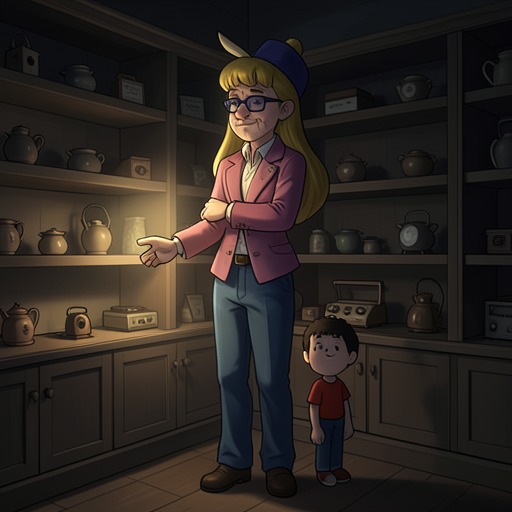
The museum’s spatial arrangement does not make objects self-explanatory. In the moonlit building, Kemal sees each object as pointing toward an indivisible moment, while the sequence joining the objects forms a story. He concludes that the museum needs an annotated catalog that recounts the history of every item, and that this catalog will also tell the story of his love for Füsun. The objects provide the moments; narrative supplies the line that connects them. A writer could therefore compose the catalog in the form of a novel.
Kemal asks Orhan Pamuk to undertake that work, believing that Pamuk’s background will help him understand the world from which Kemal’s story comes. Their collaboration makes the museum and the book reciprocal guides: the collection gives physical presence to the story, while the story teaches visitors how to read the collection. Kemal wants readers to tour the cases with the book in hand, following his account from object to object. The displayed things are not an alternative to narration; their order and interpretation depend on it.
The building as a lived archive
The museum’s conversion of a house into an exhibition makes the idea architectural as well as literary. Kemal brings his collection into the converted building, including the bedframe, musty mattress, and blue sheet from the Merhamet Apartments, where he and Füsun made love. He keeps these objects in the attic. The attic, formerly a dark, mildewed place associated with the water tank and pests, becomes a clean room open to the stars through a skylight. Kemal sleeps among the collected reminders of Füsun, treating the museum not only as a place to look at the past but as a place in which to dwell with it.
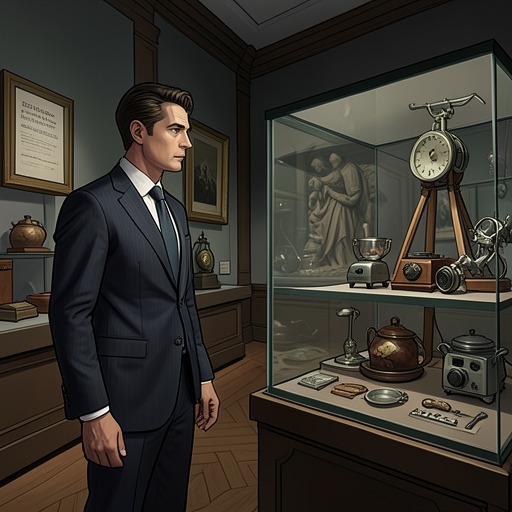
This arrangement reverses the usual movement from home to museum. Kemal has made another family’s house into a museum, but his own bed and presence begin to make it a home again. From the attic, he can see the space between the building’s upper and lower levels and remain in the company of the whole collection. The objects are distributed through a structure that can be inhabited, and the museum’s physical form brings moments of different dates into a shared present of viewing. As Kemal puts it, "Real museums are places where Time is transformed into Space."
Public memory and consolation
For Kemal, the transformation is not merely a private technique for coping with grief. He argues that objects that cause shame can become possessions in which people take pride when displayed in a museum. The Museum of Innocence should therefore make Kemal’s collection and love for Füsun publicly visible, rather than conceal them as embarrassing private fixations. He assigns the guards a role beyond protecting exhibits or controlling visitors: they are to explain the collection’s history and meanings with dignity, so that the museum awakens humility, respect, and reverence. He also insists that visitors should be able to see the entire collection from wherever they stand. Simultaneous visibility is part of the design’s consolation: the visitor can perceive the whole story at once instead of experiencing it only as a sequence disappearing into the past.
Kemal extends the museum beyond its walls. He wants the novel to include a map that allows readers to walk through Istanbul and recall Füsun as they see the city’s streets and prospects. He also proposes a ticket in each copy of the book, granting its reader free admission on a first visit. These plans make the reader a visitor and the visitor a potential reader: a personal history is carried from page to display case and back into the city. The museum’s account of memory thus joins private objects to a public route and shared acts of looking.
The concept also draws force from the contrast between the museum’s arrangement and time’s irreversibility. Kemal’s father’s death turns familiar things in the family home—old bills, medicines, telegrams, and a half-finished bottle of Yeni Rakı—into vessels of a lost past. At Teşvikiye Mosque, funerals had once been a familiar public spectacle, observed from the family balcony and even imitated by children carrying bolsters as if they were pallbearers. Such scenes show that memory is shaped by recurring family and civic practices as well as by individual recollection. Yet neither ritual nor collection can undo loss. The museum instead places material traces where they can be revisited, interpreted, and shared. Its promise is not to stop time, but to give the moments within it a form that can be seen together.